Launch of the Language School
Bridging the Gap:
How can we truly reconnect and work with the land and plants when we don't know the words our ancestors used to address them. This is where our language school comes in...
Dear friends, family and supporters,
We write to you hoping that your summer is going well and you are enjoying time outside on the land.
We have a couple of updates
Reforestation
The tree planting season is underway in Oaxaca. We are pleased to share with you that many many trees are going in the ground, partnering with multiple communities and solidifying our systems. This year we are leaning on our sister nursery “Manos a la Tierra” to provide most of the trees for reforestation. This ensures our support for partnering projects and allows us for speedy distribution.
The weather has been unpredictable. We had early rains in April/May and then nothing for weeks, which affects the growing season for most people that rely on seasonal rain subsistence farming. The altitude and poor soil and weather changes have made it harder for people to live from what they grow. Our project is working with families to build the soil, water conservation and diversification of edible trees and cacti.
At the same time, we are working on deepening our understanding and connection to the land and this year we launched our Mixteco Language school, which meets every week and is attracting a multigenerational group of students from our community. It is beyond heart- warming to see elders in attendance that were denied the right to speak the language of their ancestors in the effort to assimilate populations to Spanish.
Many of these generations were also actively removed from the land and native practices. In response we are building a small project that wants to approach climate change holistically. Dig deep into the ancestral knowledge of our elders and ensure that they have the opportunity to pass on their wisdom and actively participate in healing the land and themselves.
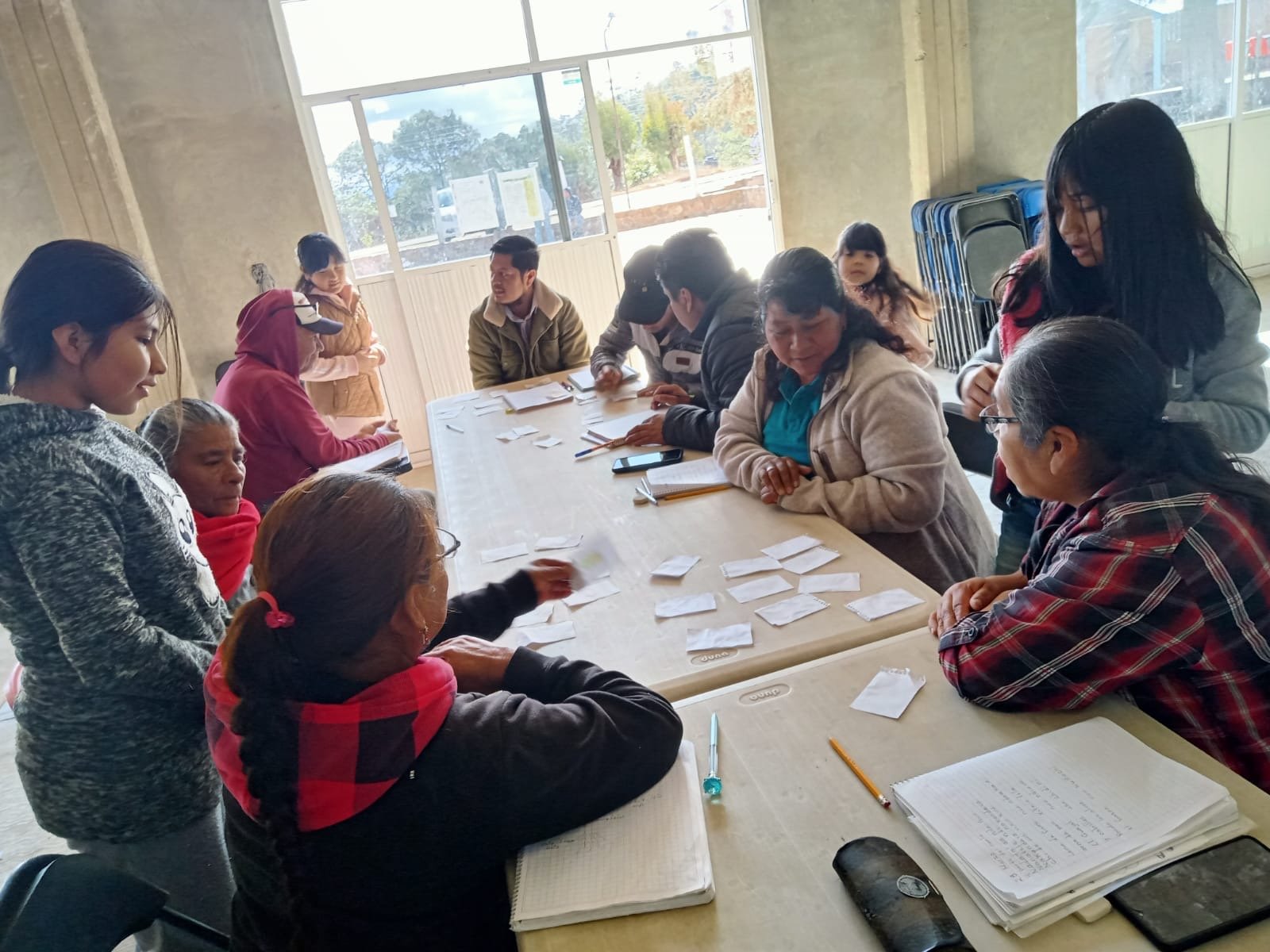
multi-generational attendance at some of the first sessions
A language school might not seem like a priority for an ecological project but having inspirations from native projects in the Northeast we understand that knowing the traditional names of the plants, herbs and trees hits a different level on the journey of connection, recovery and conservation.
Please consider a donation to our project, we understand that times are tight for everyone and we are grateful for any donations.
Reforestation this year should cost us around 6 thousand dollars, the monthly cost for our language school starts at 400 dollars a month.
Thank you for your continuous support!
You can donate here and if you have any questions don’t hesitate to reach out proyectorosenda@gmail.com
Proyecto Rosenda is a multi-generational Oaxacan family-led mutual aid and reforestation project in our seedling stage. Estamos comprometidos con la defensa de la cultura y comunidad indígena de Oaxaca. Our project is a mutual aid and reparations project that resists the non-profit industrial complex.
Thank you for your continuous support, we will continue to call for direct mutual aid, working at the edges of the nonprofit world. We appeal to the people to help fund this project with the understanding that indigenous communities are the leaders and guardians at the forefront of the fight against climate change, and the struggle for liberation.
Our beginnings.
2019 - 2020
Ofelia, as most of you already know, is my mother and co-collaborator of Proyecta Rosenda. I started spending more time with Ofelia winter of 2019, right before the pandemic. I was in a transition period, and began to invest more of my expertise in my homeland while still working in the U.S. to make a living. I knew that I wanted to work on the intersection of environmental food justice, gentrification and food sovereignty. I was ready to be home more and participate in my own community's empowerment towards collective liberation. In December of 2020, I went home to be with mom for a while.
Ofelia lives in a working class colonia, and came about her land there during a peasant struggle in the 80’s when the city started to really grow. Back then, the population was approximately 155k people. Now, with continued growth fueled by tourism and gentrification, the population of Oaxaca City and its surrounding colonias sits at around 800k people. When I was growing up, mom’s colonia was still on the periphery of the city. Now, it’s well within the ever growing perimeter, yet she and her community face water scarcity on a daily basis.

Ofelia and agave
It all started one of those December mornings. After chatting with Ofelia in the sun, she called me out to come help her move a hose to fill water into a large plastic container. The weak trickle of water from the hose did not have much pressure and wouldn't even make it 2 meters.
We started talking about her water usage and access and I realized then it was something that she often thought and worried about. At that point she was getting water delivered from the city once a week, sometimes only once every two weeks. Though mom’s house is within the city limits, her access to water is limited and insecure. I started to think about the communities that aren’t in the perimeter, that do not get water delivered, and wondered how they cope. Mom and I brainstormed. We spoke about potential solutions. We decided that at least we can plant trees to rebuild resilience in our watersheds, and while doing so raise intersectional consciousness and develop more community centered solutions.

Ofelia and her arbolitos
The early stages.
2021
We now knew our focus was to be on reforestation. So, in 2021, Proyecta Rosenda’s first planting year, we emphasized a high volume of trees. We started with a bang, and distributed over 16,000 saplings purchased from local nurseries with the help and support of our family.
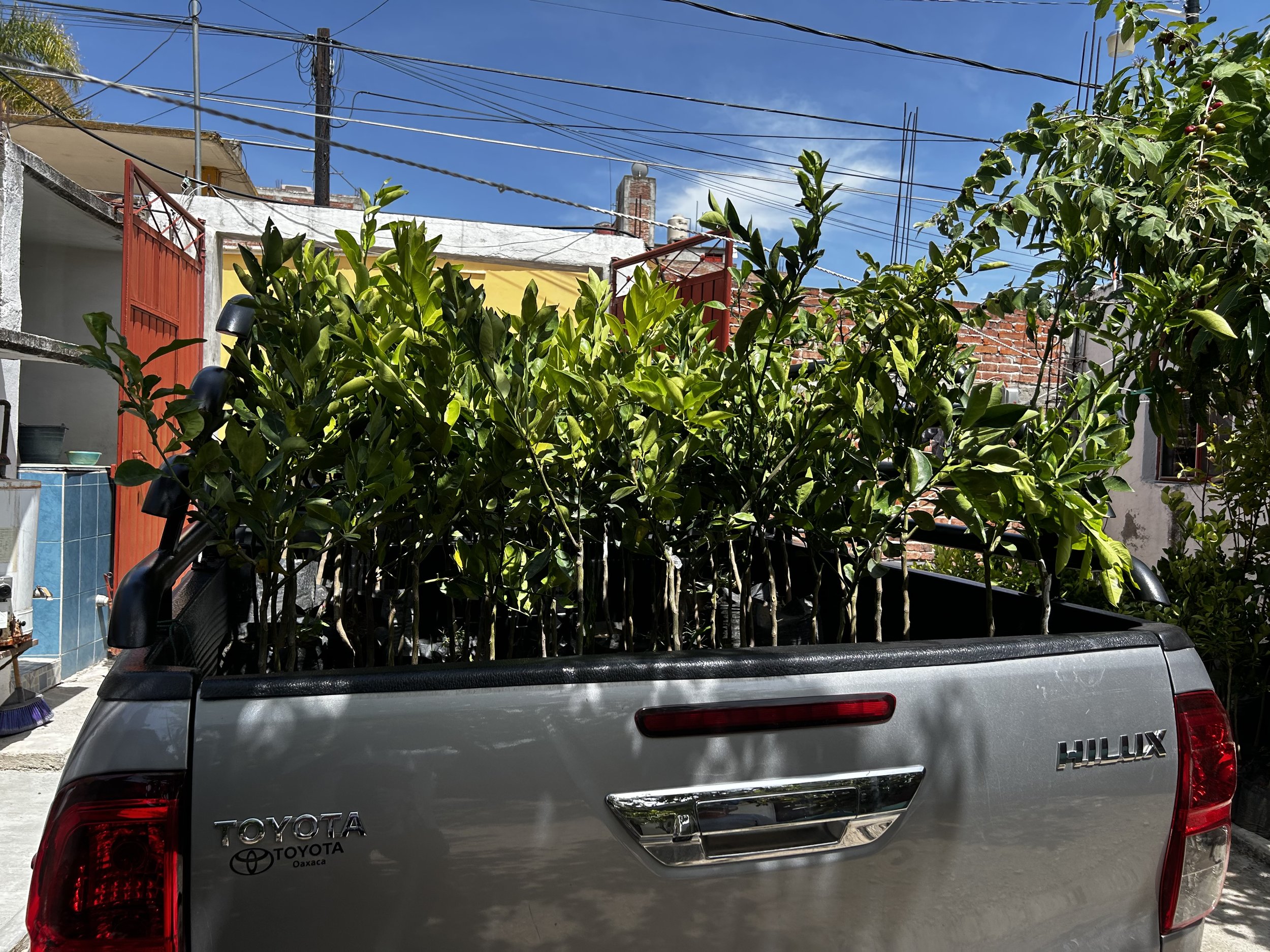
Orange Trees for Delivery

Ofelia Picks Peaches
During this first year, I quickly realized many people in the community were skeptical, and with valid concern. My implementation of the project echoed that of typical NGOs. Why were we giving away trees for free? Were we really not expecting anything in return? Who’s best interest is actually in mind? Some people expected compensation, which is also valid as they were offering the use of their land for the project.
After spending so many years in the states working in the non-profit industrial complex, I had absorbed western tendencies that missed the mark back home in Oaxaca. I thought starting with urgency and more is best. Although the sheer number of trees was a huge success, my time back home showed me that we needed to prioritize and invest much more in building trust and strengthening the community.
Then I realized: I forgot our traditional protocol, I hadn’t consulted the elders. I reevaluated my approach completely. I had to humble myself and remember that the land and indigenous people are not separate, we are one.
The support of the elders was to be essential for not only the success of this project, but for the cohesion of the community overall and to all similar initiatives we take collectively now and in the future. Community must be centered in all our processes and initiatives.
We shifted focus on building relationships, beginning with fifteen families in Ofelia’s community. We paid a ten-person community work crew for planting efforts over the course of a few months, and shifted to focus on land we have access to within the family.
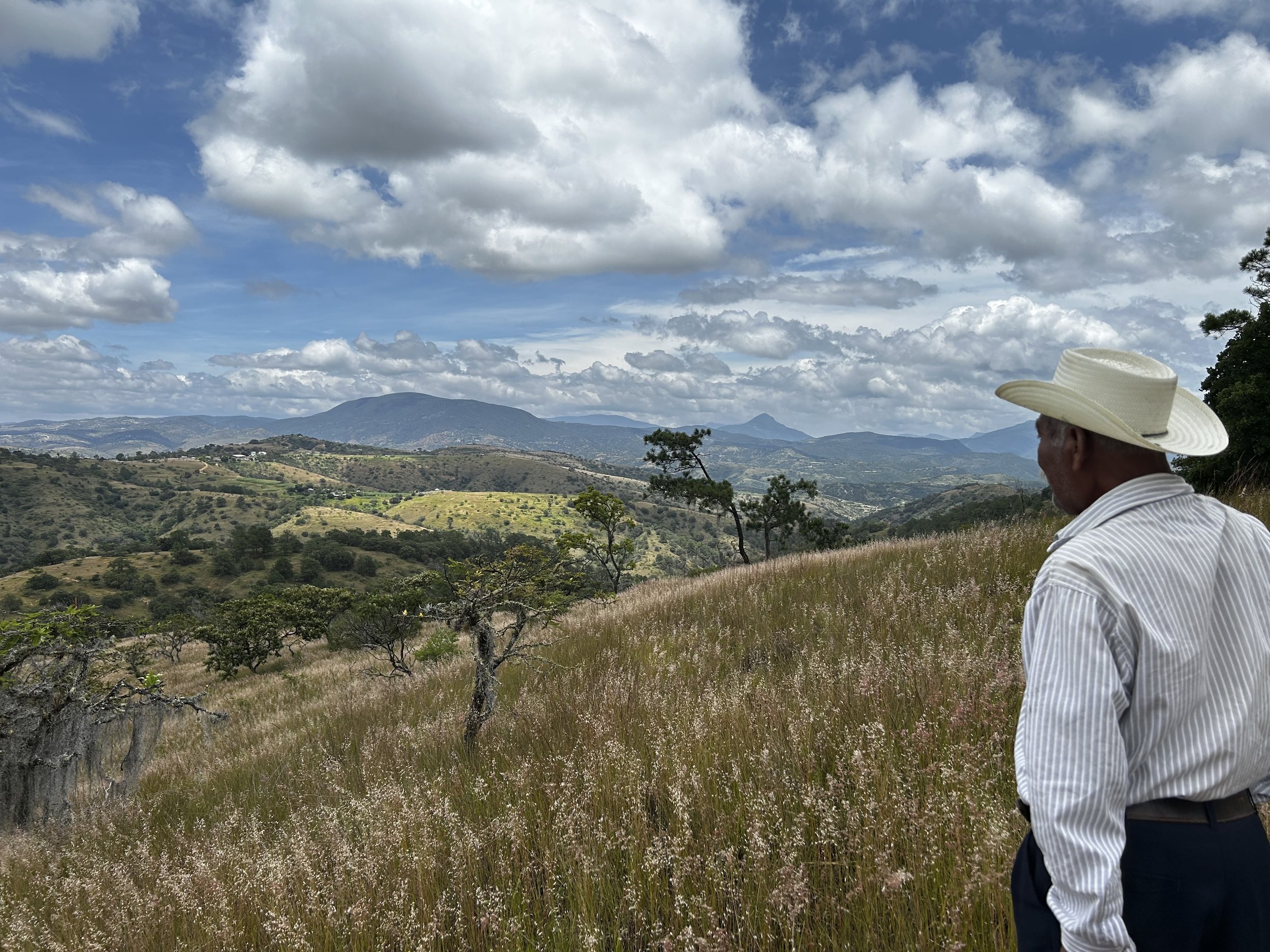
Tio Flavio
Community.
2022
In 2022 we reprioritized. We scaled back the volume of our plantings significantly, and shifted our focus to building trust and bolstering engagement with participating and curious families. I began to talk more with my cousins and loop them into the project. We centered the council of elders, and out of a number of conversations with Ofelia, my uncles, and other elders in the community, we decided to host a barbacoa and community meeting to discuss the project. About 20 people attended that first barbacoa. We began to hold more meetings in Llano Verde, then Santa Maria Albarradas with the mezcalero family of Dos Pasiones. More and more people came into the fold.

Barbacoa pit

Community meeting
Climate change was a primary topic of conversation during those first series of meetings. We were experiencing it first hand, our water becoming more and more scarce. We discussed unchecked extraction, and recognized this exploitive and unsustainable practice needed to be addressed and counteracted head on.
At the end of 2022, we secured land with an ancestral spring called Hierba Santa by the elders in Llano Verde, near Ofelia. The spring hadn’t been tended to since my uncle passed in the early 90s. The barranca sits between two mountains, and due to topography sediment had collected over time. We began the process of digging out the sediment by hand.

Hierba Santa, Water for Us, Water for Wildlife
Also during this time, we began to build our tree nursery in Llano Verde near the spring. We had already purchased an initial stock of 5,000 saplings, a mix of native and fruit trees, in an effort to become vertically integrated, lower costs, and ultimately to gain more operational independence.
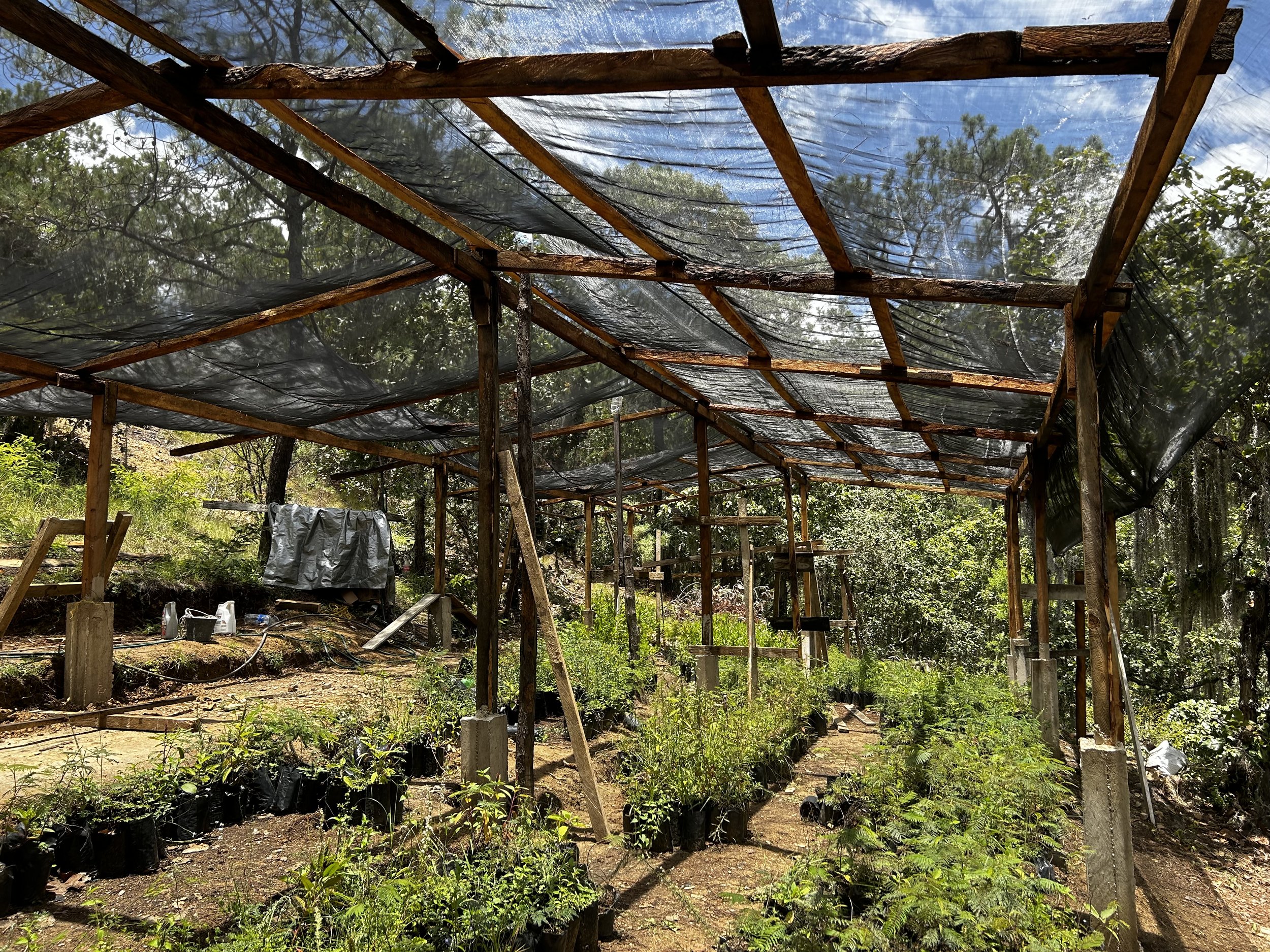
The Nursery
Momentum.
2023
In 2023, we saw a lot of momentum, ramped up multiple projects including the water tanks and the construction of the nursery, and expanded our outreach to neighboring communities.
Early in the year, after removing much sediment from the spring, we began construction of the water tanks. Hierba Santa proved to be abundant, and filled up daily during the construction of the cement holding tanks, and each work day we had to dig to clear it. We finished the construction of the tanks in April of 2023. The tanks now hold up to 4,000 gallons at a time, and act as a drinking reservoir for fauna as well.
We secured permits to harvest three trees in order to clear a space for the nursery and provide wood for its structure. The trees were milled by hand in situ by one crew, and the cement footings were laid and the nursery structure built by another.

Well builders
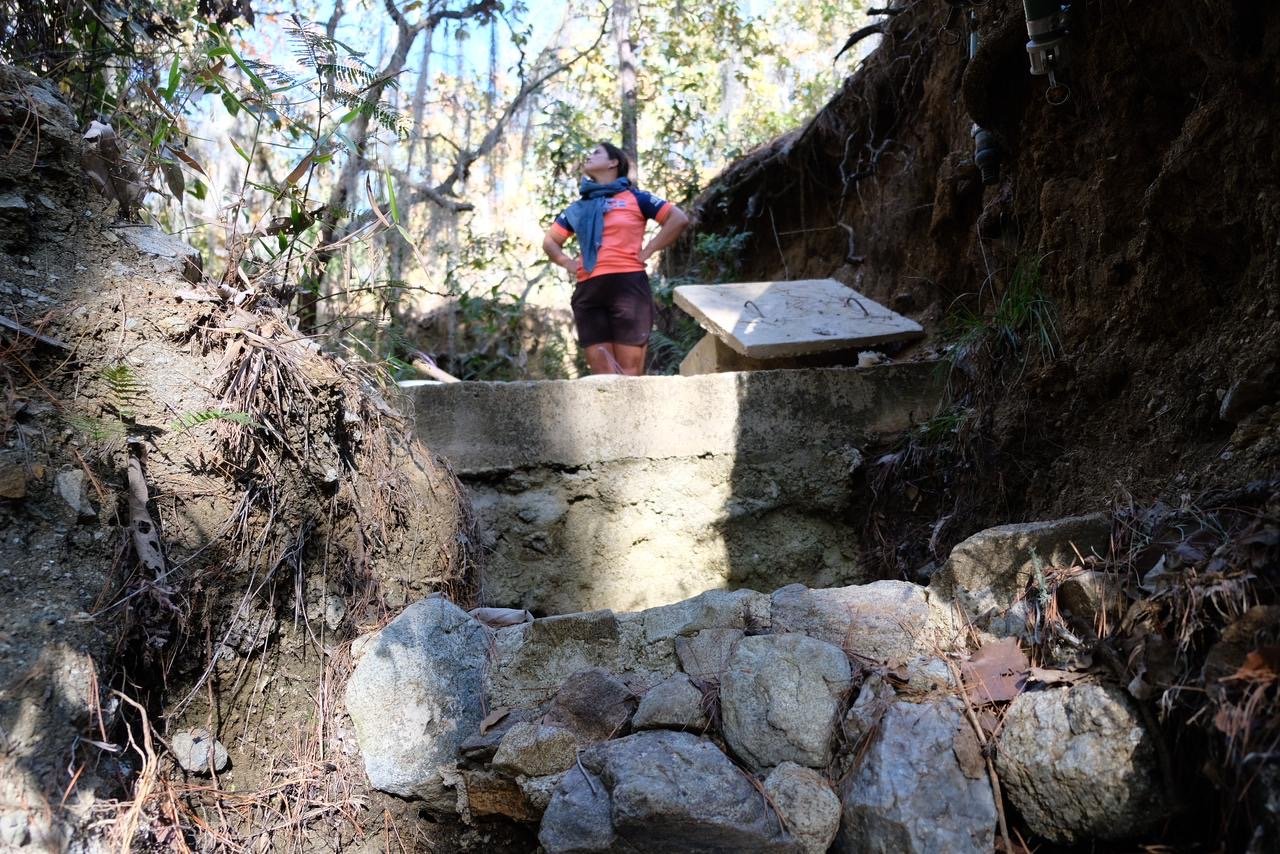
Well in Progress
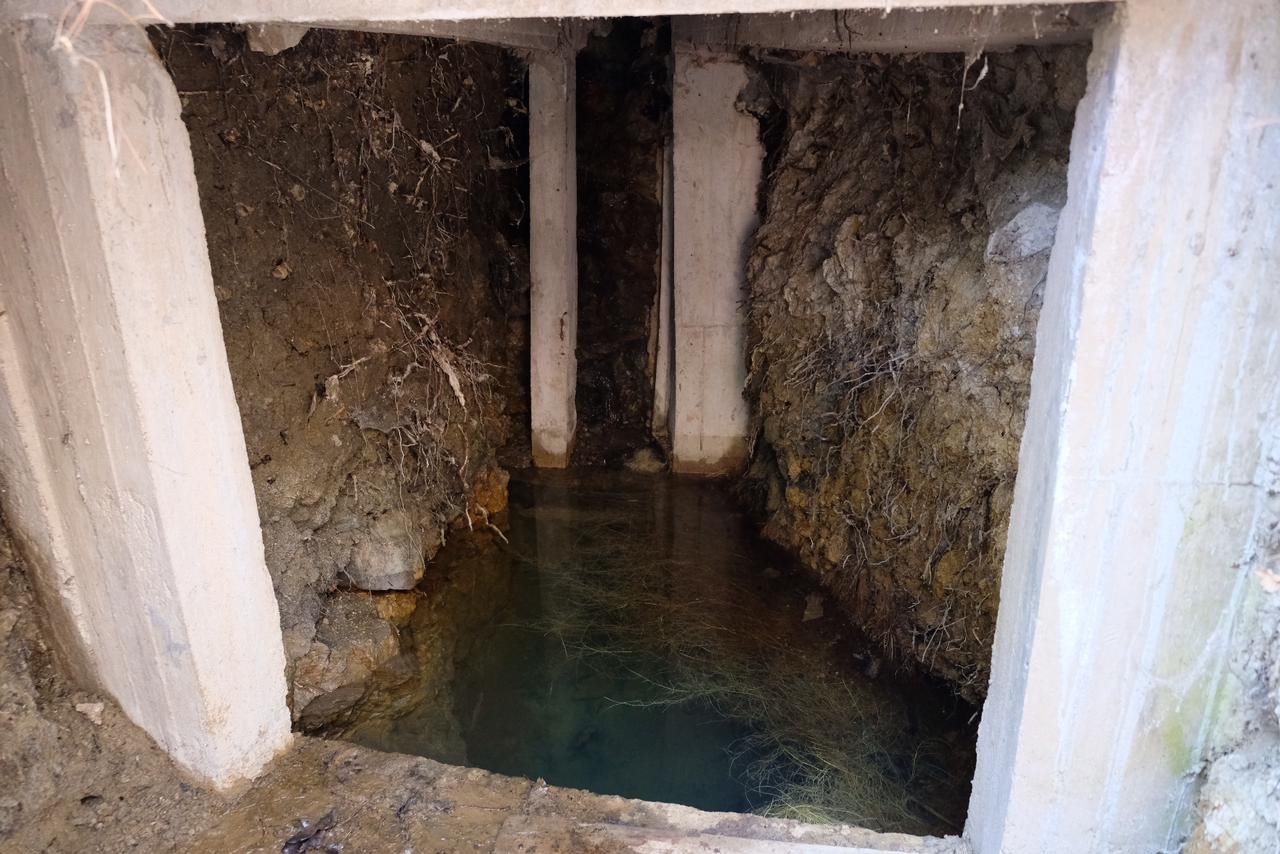
Well Reservoir in Construction
Our community had really begun to gel. People were invested, collaborating and taking initiative. The projects were now guided by elders. We had formed real trust between us. The saplings were well received with participating families, the plantings successful, and people in neighboring colonias were intrigued. We continued our outreach organically, engaging those who came to us and began to work beyond Albarradas and Llano verde. We began to work with families in El Cortijo, San Jeronimo, and Ojo de Agua, as well as with communities in el valle in Tlacolula and Matatlan.
In Winter of late 2023, Ofelia began a soil remediation project for the nursery. We learned that the trees cannot survive or take root in the heavily compacted clay that is exposed in certain regions, especially in the mountains, where the land is sloped. Over the past number of centuries, due to deforestation and other exploitation of the land for foreign and outside interest, the top soil has eroded, leaving bare red clay on the surface. Ofelia is currently utilizing amendments such as peat, vermiculite and other organic materials. Our goal is to move away from purchasing amendments, and build an infrastructure to create and provide our own remediation techniques using locally available materials and incorporating systems such as the Johnson Bio-Reactor Compostor.

Soil degradation
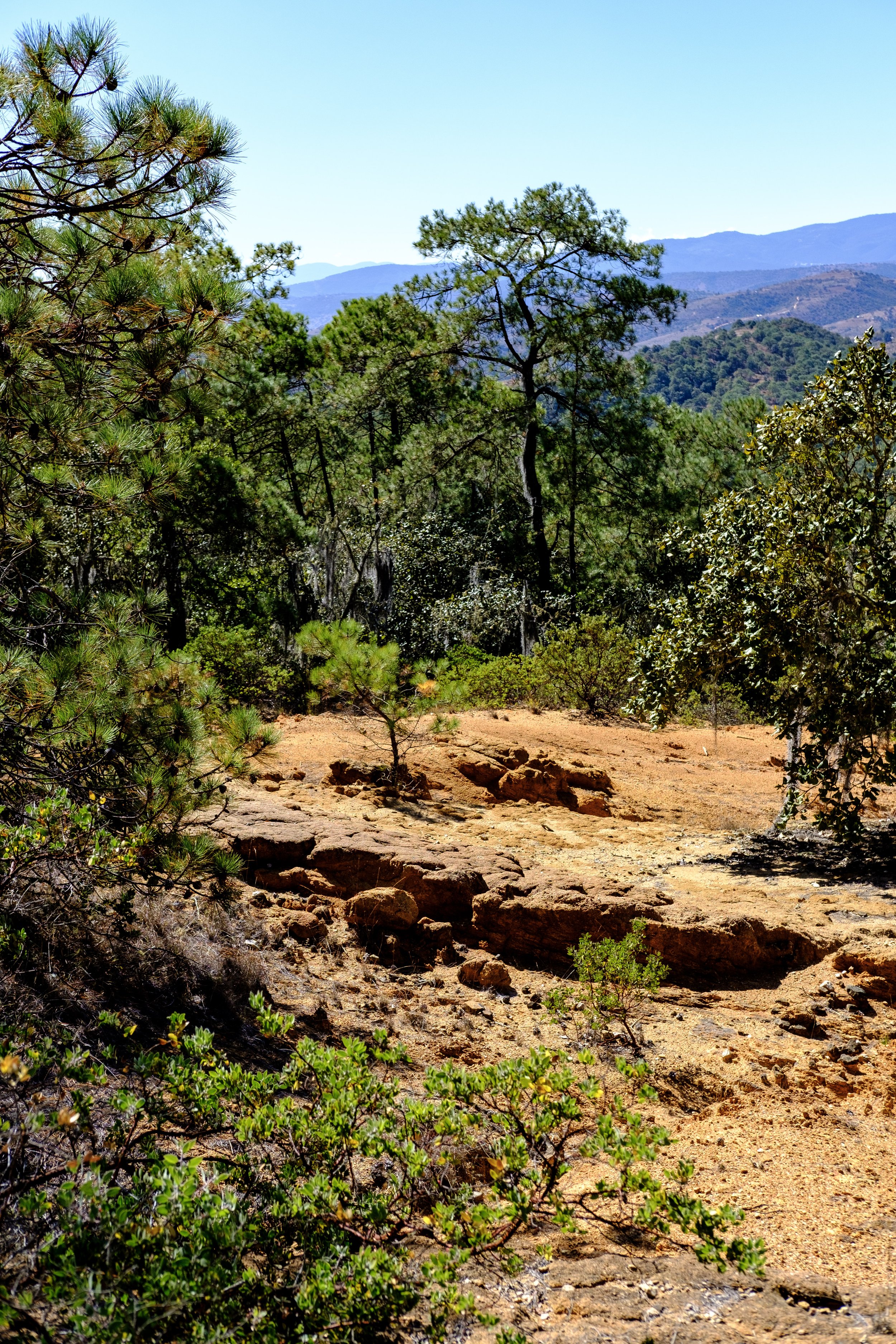
Newly Planted Native Pine Tree in Eroded Soil Inspires Remediation
Stay tuned for our next post. We’ll follow up in the coming weeks with our plans and progress in this 2024 season, as well as deep dives into the stories of the Spring and Well, The Nurseries, the Communities, Ofelia’s Soil Remediation and more.
Follow us on Instagram @proyectorosenda

Thank you for your continuous support as we embark on our biggest fundraising campaign yet. We will continue to call for direct mutual aid, working at the edges of the nonprofit world. We appeal to the people to help fund this project with the understanding that indigenous communities are the leaders and guardians at the forefront of the fight against climate change, and the struggle for liberation.
-Nef